Mould dimensional control
A conforming segment starts with a conforming mould. Before it leaves the factory, every CBE mould is laser-checked to verify its dimensional conformity, with a report to back it up. And because a mould needs monitoring throughout the project, CBE supplies with each set of moulds the tools your teams need to check them at any time.
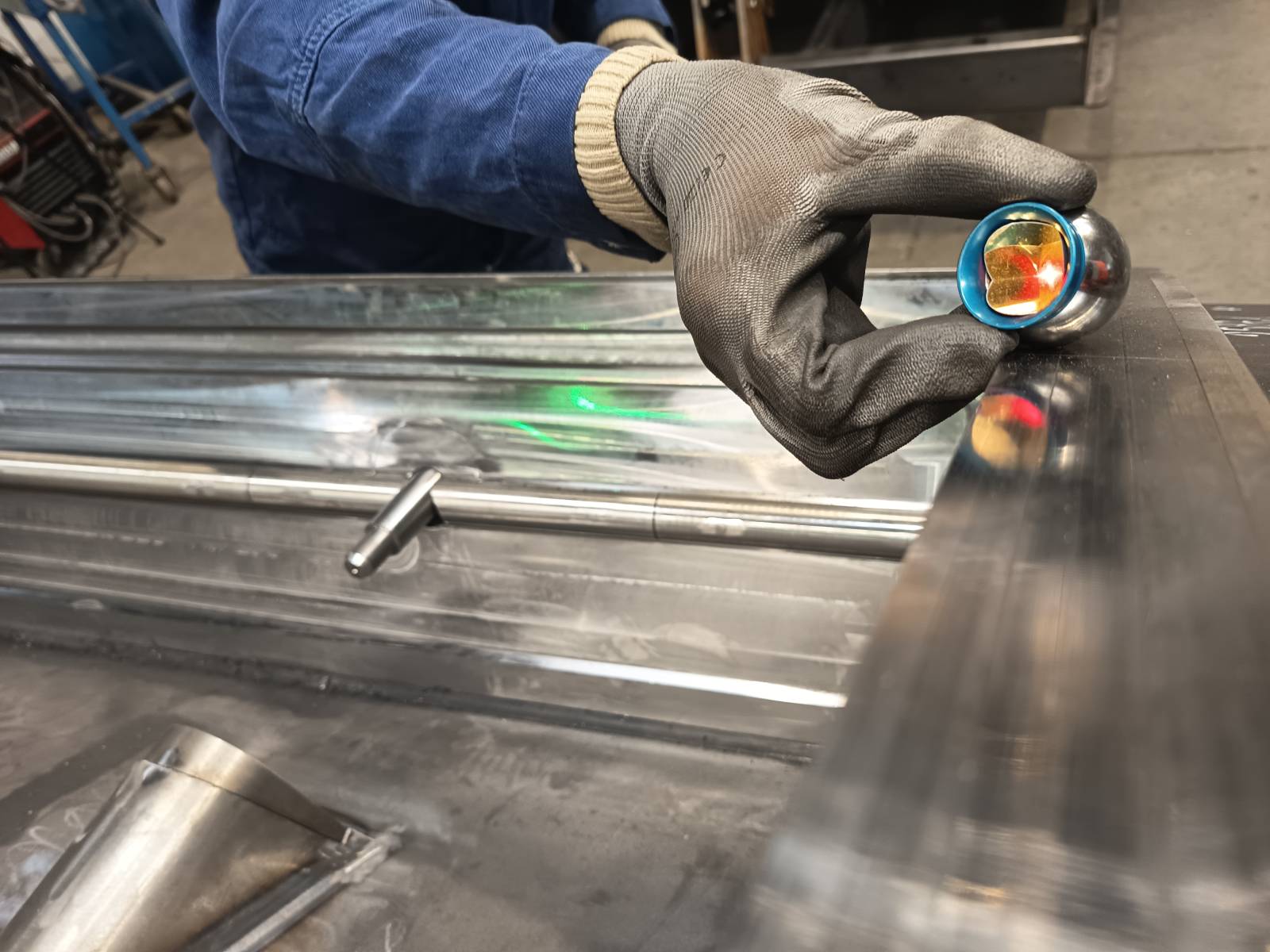
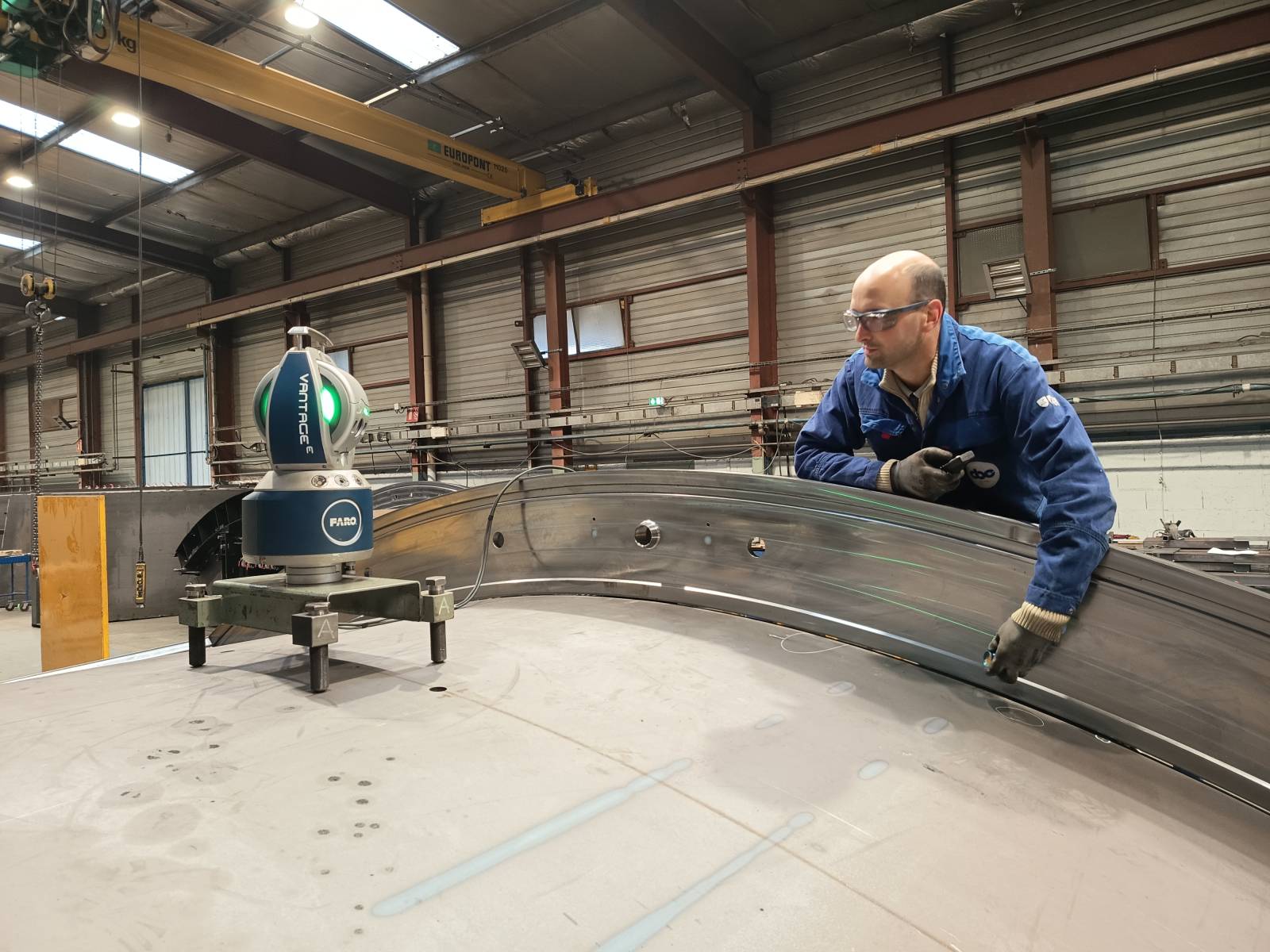
Laser control before the mould leaves the factory
Before shipment, every mould is laser-checked using a 3D Tracker, coupled with analysis software programmed specifically by CBE for tunnel segment mould control. The principle: measure a point cloud on the mould and compare it to the theoretical surfaces. All the geometric values that define the volume are extracted, then compared to the tolerances in a control report.
The control report includes:
- All the characteristics of the reference surfaces
- Widths at control points
- Diagonals at reference intersections
- Jig orientation
The mould leaves the factory with a proven, documented geometry: you start production on a tool whose conformity is on record.
An after-installation verification, optional
Transport and installation can put a mould under stress. As an option, on request, CBE can carry out an on-site laser verification after installation, to confirm the geometry has stayed within tolerance before production starts.
Manual control, throughout the project
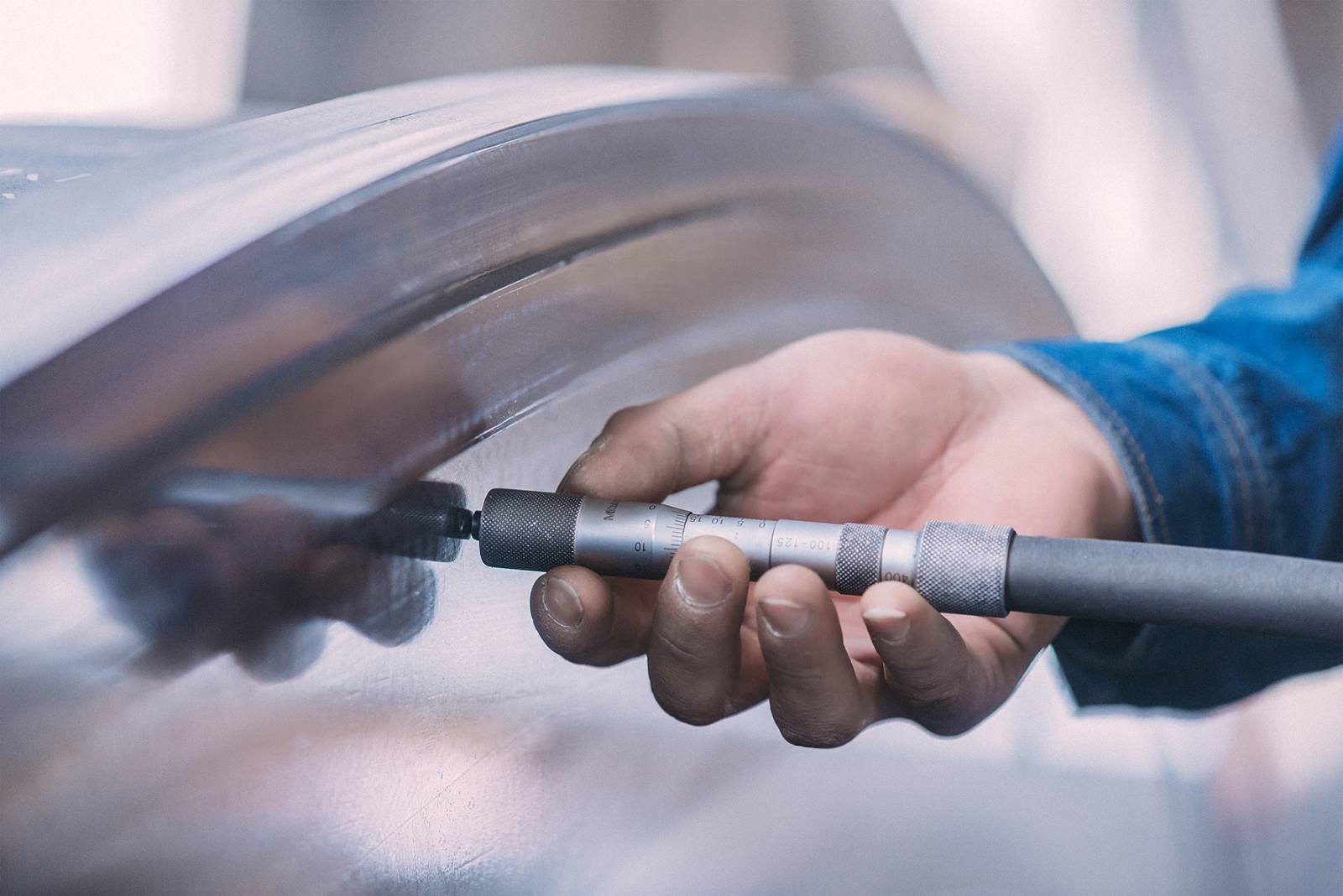
A mould's conformity is monitored continuously, not only when it leaves the factory. CBE therefore supplies with each set of moulds a set of manual inspection tools, so your teams can check the mould at any time:
- an angle template to check the radial sides
- a template to check the width and depth of the mould
- a set of shims
- a magnifying glass
- a tape measure
- a depth gauge
- a digital micrometer gauge
Your teams keep control of the mould's conformity throughout production. On a carousel line, this monitoring can also be automated through in-line robotic control (→ Automation and robotics).
Key benefits
- You start production on a mould whose conformity is proven, with no surprises on the first segment
- Less risk of scrap caused by a mould that is out of tolerance
- Conformity that is traceable and documented
- Your teams keep control of the mould throughout the project.